
The Architecture of Clarity
Jan. 30, 2026
I’m convinced I was born on the wrong continent.
Don’t get me wrong. Canada is a wonderful country—that is, as long as we stay that way, and not become the 51st state.
As a Canadian, I’m as proud as the next person of our county’s natural beauty. Our safe, vibrant cities. And our really, really nice people.
But, still somehow, Europe’s where my soul resides.
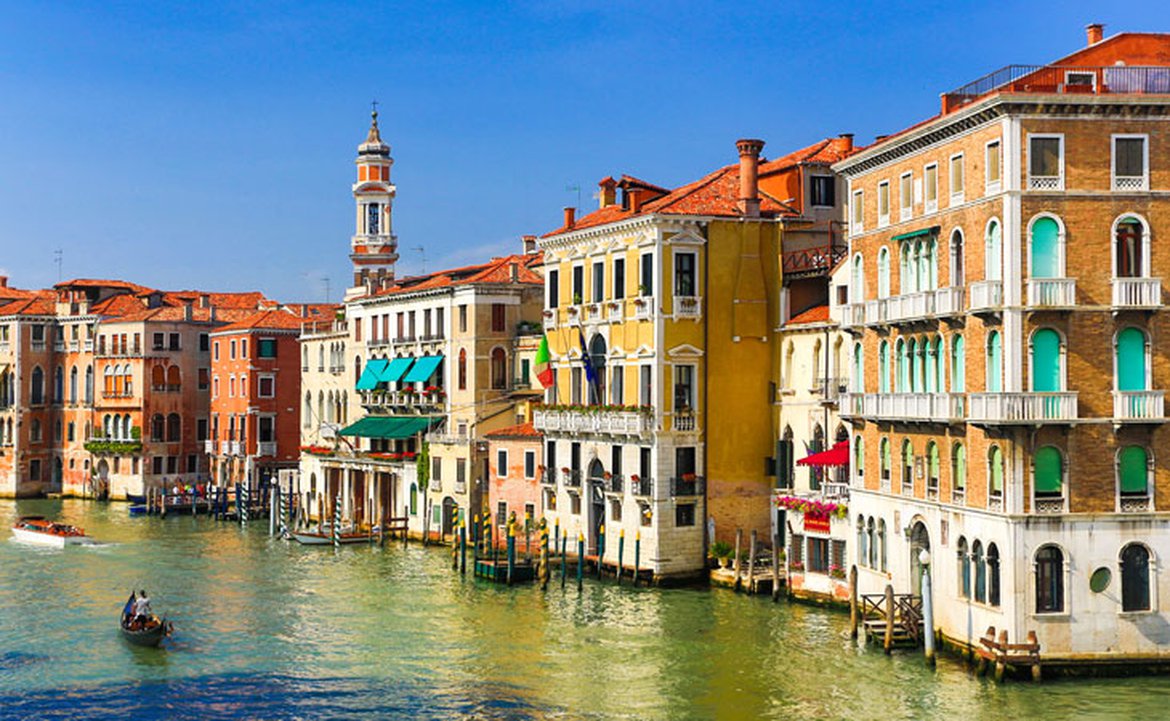
Since my first trip to Paris and Venice in 1984, I’ve been captivated by the Old World. Architects often talk about the importance of place. To me, European cities are where you feel that importance most clearly. You can’t help it—there’s just so much beauty and history and, well, humanness baked into the very stones of those old cities and their iconic buildings.
Last November, I had the good fortune to visit three such iconic buildings: the Royal Concertgebouw in Amsterdam, the European Parliament in Brussels, and Anfield Stadium in Liverpool. In their own way, each of these buildings is a shrine to human ambition and possibility: the Concertgebouw to music, the EU Parliament to democracy, and Anfield to sport.
In each place, the atmosphere is palpable. Somehow, each one makes you feel that you’re part of something bigger, bolder and better than the daily news headlines would suggest. Given the general chaos of our modern world, I’d say our souls could use a little more of what each of these buildings represent. Better still, all three in liberal doses.
And you know what else we could use more of? Plain language. (Of course.)
Plain, or clear, language is officially defined in ISO Standard 24495-1 as a communication in which the “wording, structure and design are so clear that intended readers can easily find what they need, understand what they find, and use that information.”
Or, as Scottish Sherriff A.J.G. MacKay said in 1887, rather more succinctly, “Good drafting says in the plainest language, with the simplest, fewest, and fittest words, precisely what it means.”
At its best, plain language is honest, authentic, respectful. In that way it is an antidote to the artful spin, the misinformation, the “alternative facts”, and the outright lies that continue to worm their way into both public and private conversations today.
So, how do we write in plain language? Here are my top three tips.
1. Put your reader first.
Before you commit a single word to paper or screen, take a moment to identify your intended audience.
What do you know about him/her/them? What is their level of education and sophistication? How familiar are they with the ideas and terminology you’re writing about? Where and under what circumstances will they be reading your communication? Might they have a disability that will make understanding your communication more difficult? (Always assume yes, for at least some part of your audience.)
As you craft your communication, never lose sight of your readers. Throughout, consider how you can best guide them—with your words (simple, familiar), structure (most important information up front), and design (organized, uncluttered) to find, understand, and use the information you’re sharing.
2. Know your purpose.
Why are you writing? What is your objective (or objectives, as you could have more than one)?
Maybe you’re simply sharing information or providing an update. Maybe you’re inviting your readers to offer input or comments. Perhaps you need buy-in and co-operation. Or maybe you are directing your readers to take some sort of action—like signing up for a newsletter, filling out a form or survey, or showing up somewhere at a specific time.
Being crystal clear about your purpose is crucial if your communication is going to have its intended effect. To quote the late George Harrison, “If you don’t know where you’re going, any road will take you there.”
As a follow up to that I say, if any road will take you there, chances are, you’ll find yourself meandering, chasing dead ends, getting lost, backtracking, and, most likely, starting all over again. I don’t know about you, but that doesn’t sound like the optimal writing experience. Never mind what this will be like for your poor reader.
3. Write and edit for clarity.
If you’re taking the time to write something, I assume it’s important. So, respect yourself, not just your reader. Don’t let your good ideas fall on deaf ears because your readers misunderstood you, or worse, gave up entirely because they found it too hard to figure out what you were trying to say.
Keep it simple. Everyday words. Short sentences. Short paragraphs. Paragraphs with one idea and a topic sentence. Headings and sub-headings. Bulleted lists. Active voice. No buried verbs.
Have I said all this—and more—before? You bet.
But until all of us are perfect, me included, it doesn’t hurt to say it again. (I had originally written, “it bears repeating” there but smartly decided to follow my own advice!)
Iconic buildings are iconic for a reason. They endure. They continue to amaze, delight and inspire us, century after century.
And so it is with plain language. May you be inspired to communicate like the honest, authentic, respectful human beings you are.
Remember this: Plain language puts readers first. Its wording, structure and design are so clear that readers can not only easily find the information they’re looking for but also understand and use it. Long live plain language!
Plain Language